If your hands-free breast pump feels uncomfortable—or worse, keeps leaking—you’re not alone. Most issues don’t come from the pump itself, but from how it’s used.
This guide walks you through exactly how to fix the two biggest problems: leaking and wrong flange size, so you can pump comfortably and confidently anywhere.
1. Snow Bear Electric Breast Pump (Beginner-Friendly Option)
Overview
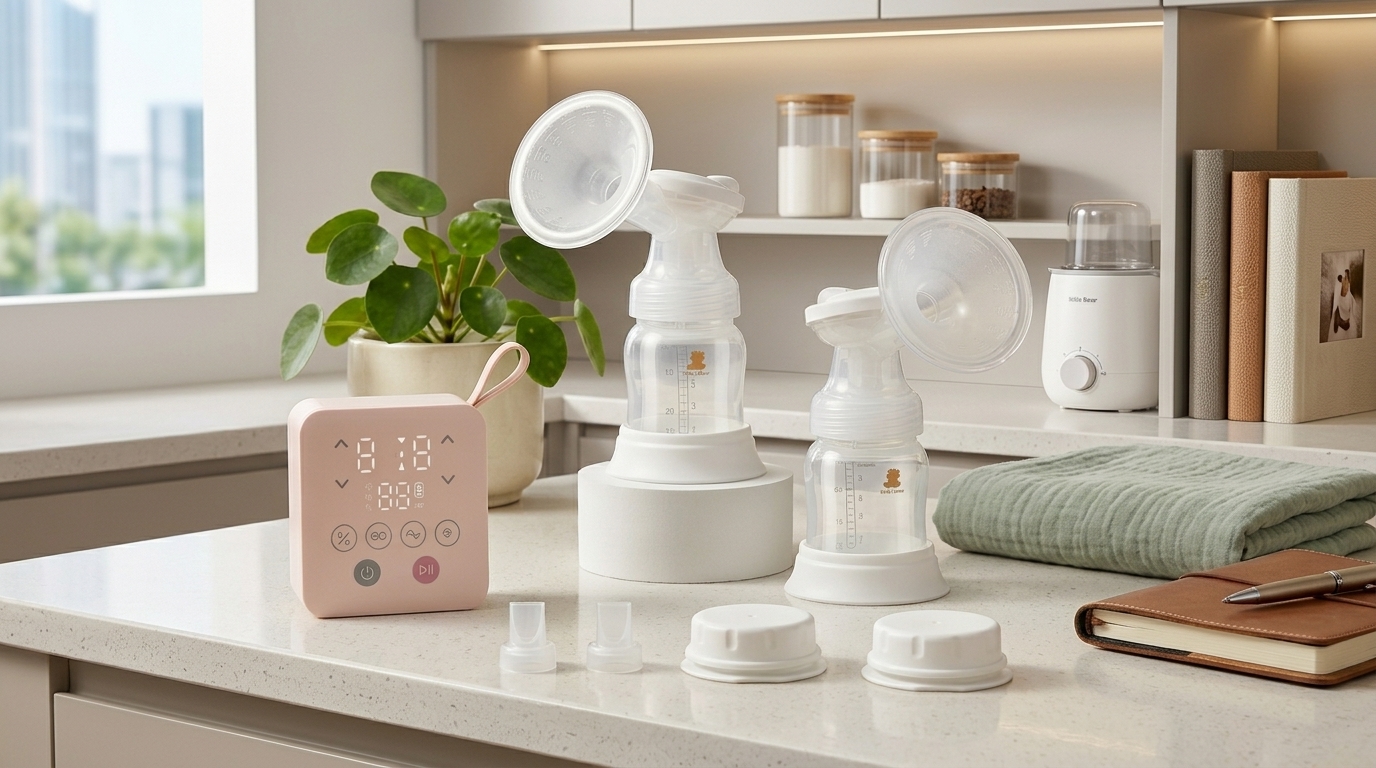
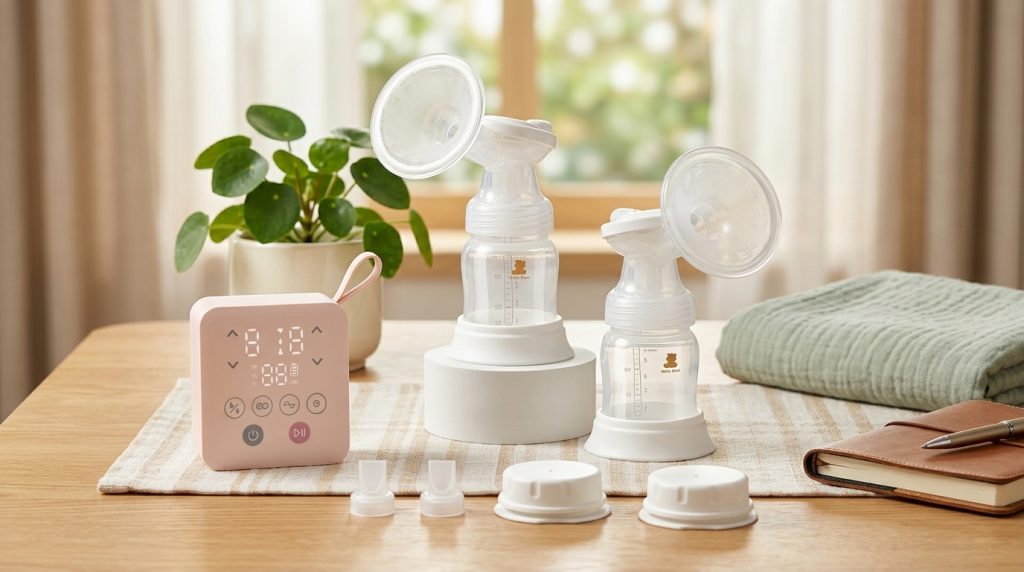
The Snow Bear Electric Breast Pump is a traditional-style pump, but it’s actually a great starting point for beginners learning proper technique before transitioning to wearable models.
It offers consistent suction and control, which makes it easier to understand:
- how your body responds
- what correct suction feels like
- how proper flange sizing works
👉 Think of it as a “training tool” before going fully hands-free.
Key Features
- 4 pumping modes + 9 intensity levels
- Stable, consistent suction
- Anti-backflow protection
- Portable control unit with battery
- Simple interface for beginners
Real Experience (Why This Matters First)
Before using a hands-free pump, many moms struggle because:
- they don’t know their correct flange size
- they use too much suction too early
- they position the pump incorrectly → causing leaks
Using a stable pump like this helps you build the right habits first.
Step-by-Step: How to Use a Hands-Free Breast Pump Correctly
Step 1: Get the Right Flange Size (Most Important)
👉 This is where most problems start.
Signs your flange size is WRONG:
- Pain or pinching feeling
- Nipple rubbing against tunnel sides
- Low milk output
- Redness after pumping
What correct fit feels like:
- Nipple moves freely in the tunnel
- Minimal friction
- Comfortable suction
👉 Tip:
Measure your nipple (in mm) and choose a flange slightly larger. Many pumps include multiple sizes—use them.
Step 2: Position the Pump Properly (Prevent Leaks)
With hands-free pumps, alignment is everything.
Correct positioning:
- Nipple centered in flange
- Pump sitting snug inside bra
- Slight forward tilt (not too upright, not too flat)
Common mistake:
- Putting it on too quickly → misalignment → leaks
👉 Take 10 extra seconds to adjust—it makes a big difference.
Step 3: Start with Low Suction First
A lot of beginners make this mistake:
Turning suction to max immediately
Better approach:
- Start with stimulation mode (low suction)
- Let milk flow begin naturally
- Gradually increase intensity
👉 This reduces discomfort and improves output.
Step 4: Stay in the Right Position While Pumping
Hands-free doesn’t mean “carefree.”
Avoid:
- Bending forward too much
- Lying flat
- Sudden movements
Safe movements:
- Sitting upright
- Walking gently
- Light tasks
👉 Most leaks happen when milk shifts due to body position.
Step 5: Don’t Overfill the Container
Another common issue:
- Letting milk go beyond capacity → overflow leaks
👉 Always:
- Check level mid-session
- Stop or empty before it gets too full
Step 6: Clean and Reassemble Properly
Improper assembly = hidden leaks
Make sure:
- All valves are sealed correctly
- No loose parts
- Silicone components are dry before use
Wearable vs Traditional (Quick Reality Check)
| Factor | Wearable Pump | Traditional Pump (Snow Bear) |
|---|---|---|
| Ease of learning | ⭐⭐⭐ | ⭐⭐⭐⭐ Easier for beginners |
| Leak risk | ⭐⭐⭐ Needs proper setup | ⭐⭐⭐⭐ More stable |
| Comfort control | ⭐⭐⭐⭐ | ⭐⭐⭐⭐ |
| Mobility | ⭐⭐⭐⭐⭐ | ⭐⭐ |
👉 Truth:
Traditional pumps help you learn faster. Wearable pumps give you freedom—but require better technique.
Pros & Cons (Snow Bear as a Starter Tool)
✅ Pros
- Stable suction (great for learning)
- Easier to control intensity
- Lower risk of leaks
- Beginner-friendly
❌ Cons
- Not hands-free
- Limited mobility
- Less discreet
Final Take: What Actually Solves Leaks & Discomfort?
It’s not just about buying a better pump.
👉 The real solution is:
- Correct flange size
- Proper positioning
- Controlled suction
- Good pumping habits
Best Strategy for Beginners
✔️ Start with a controlled pump (like Snow Bear) to learn
✔️ Then transition to a hands-free pump once confident
Bottom Line
If your hands-free pump is leaking or uncomfortable, don’t assume it’s defective.
In most cases, it’s a setup issue—not a product issue.
Fix the basics, and you’ll notice:
- Better comfort
- Better output
- Less frustration
And most importantly—you’ll actually save time, which is the whole point of going hands-free